
The inclusion of period costs in pricing decisions also involves a strategic component. Companies may decide to absorb certain period costs temporarily to gain market share or enter a new market, setting prices that are competitive yet may not fully cover these expenses in the short term. This approach can be particularly effective in industries where customer acquisition costs are high, but the lifetime value of a customer is significant.
- This approach aligns with the principle of matching expenses with revenue, providing a more accurate representation of the true cost of goods sold.
- Period Costs directly affect a company’s profitability by reducing net income on the income statement.
- Period costs are of no less help, as they allow you to understand how well you’re running your business.
- In other words, they are initially classified as assets and are transferred to expense when they are sold.
- From an accounting perspective, the allocation of these costs over time can significantly impact financial statements and managerial decision-making.
Importance of Period Cost Analysis
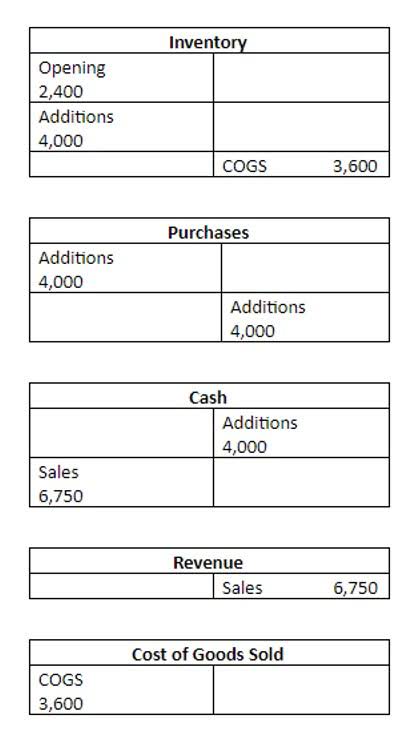
An example of such cost is the cost of material, labour, and overheads employed in manufacturing a table. Classify the following costs as (PRO) product costs AI in Accounting or (PER) period costs. A period of costs is charged to the income statement in the period they incur. This cost is excluded from the cost of goods sold, which is reported in the top line of the income statement. Instead, these expenses are attributed to general administrative and selling expenses.
A Comprehensive Guide to Period Costs Accounting
For example, if you alter insurance premiums or even switch to a firm with lower premiums, the price difference must be reported. Reassessing your period costs may assist you in identifying areas where you can save money. FIFO distinguishes between current-period expenses and those in beginning inventory. The costs in the initial inventory are moved out in a lump sum under FIFO costing. FIFO costing does not combine former tenure costs (in beginning inventory) with current period expenses. ABC provides a more accurate understanding of cost behavior and cost drivers, enabling businesses to make more informed decisions about pricing, product mix, and process improvement.
- By looking at period costs, you can evaluate the impact of such decisions on the bakery’s overall financial health.
- Manufacturing overhead is all the other stuff that does not fit into the direct materials classification or the direct labor classification but is still a product cost.
- Service companies use service overhead, and construction companies use construction overhead.
- Today, we’re breaking down these two concepts to understand their general aspects, relationship with financial statements, and overall impact on business decision-making.
- Analyzing Period Costs enables management to evaluate the performance of different departments and identify areas for improvement.
- These can be broadly categorized into selling costs and administrative costs.
The Role of Aggregate Planning in Supply Chain Management: Key Strategies and Best Practices
We stated that once a product has gone through the production process and is considered finished, no more product related costs can be added. We now know that those product costs are direct materials, direct labor and overhead. Distribution happens after the product is manufactured, accounting so it cannot be a product cost. It is considered a selling cost because I cannot complete the sale of the product if I cannot get it to the customer.


For example, reducing administrative expenses can lead to higher net income and retained earnings, strengthening the company’s financial position. Period Costs directly affect the company’s profitability by reducing net income on the income statement. These expenses are deducted from revenues to calculate operating income, reflecting the costs incurred to support the business’s ongoing operations. By recognizing Period Costs in the income statement, stakeholders can assess the company’s ability to generate profits from its core activities and evaluate its operating efficiency over time. Product costs (also known as inventoriable costs) are those costs that are incurred to acquire, manufacture or construct a product. In manufacturing companies, theses costs usually consist of direct materials, direct labor, and manufacturing overhead cost.
- Reassessing your period costs may assist you in identifying areas where you can save money.
- Once they’re on the income statement, the accountant can deduct them from the gross profit to calculate the period’s net income.
- This treatment ensures that the financial statements accurately reflect the company’s operational costs and help in assessing its profitability during a specific accounting period.
- In order to help you advance your career, CFI has compiled many resources to assist you along the path.
- Since they are not product costs, period costs will not be included in the cost of inventory.
In addition, knowing and managing capacity costs provides a key advantage for companies looking to improve their financial decision-making processes. There is no proper formula to calculate total period costs, and recording period expenses doesn’t follow a set of rules across all areas. The accountant must carefully review the time-related costs and decide whether they should be included in an income statement. Time cost represents a major portion of indirect costs, making it important for the smooth operation of the business. Reporting period costs are based on the revenue for which they are incurred and the accrual for a specific accounting period. These expenses are charged to the statement of profit & loss and are not directly related to production.
Marketing Expenses

If it is a period cost, determine if the cost is related to selling the product or the general administration of the company. Terms like administrative indicate that the cost is an administrative cost. If it is a product cost, determine if the cost is a direct material or direct (touch) labor. If it is neither of these, it should be classified as manufacturing overhead. Let’s say you’re considering hiring more staff to handle the increasing number of orders. By looking at period costs, you can evaluate the impact of such decisions on the bakery’s what are period costs overall financial health.
This means that period costs don’t change with the amount of goods produced or sold. Resource Allocation is a crucial aspect of cost accounting that allows businesses to assign expenses to specific cost objects, such as products, services, or departments. This helps organizations make informed decisions and manage their resources effectively. The integration of period costs into budgeting and forecasting is a sophisticated exercise that enhances the precision of financial planning. When preparing a budget, companies must estimate not only the variable costs that fluctuate with production levels but also the fixed period costs that remain constant regardless of output. This comprehensive budgeting ensures that all aspects of the company’s financial obligations are anticipated and accounted for, allowing for a more robust financial plan.
- For instance, a small retail store might have a higher proportion of period costs compared to a large manufacturing company.
- Such cost classifications have been proven useful to people, like most analysts who develop several costs, classifying them per their uses in various managerial applications.
- These costs include direct materials, direct labor, and factory overhead.
- By aligning costs with activities that drive value, ABC helps businesses optimize their operations and improve profitability.
- Fixed costs remain constant for a given tenure, irrespective of the level of output.
What are period costs in managerial accounting?
Ever wondered how businesses track and manage the various expenses they incur while keeping their operations running smoothly? From paying employee salaries to covering utility bills and marketing expenses, Period Costs encompass a wide range of expenditures necessary for day-to-day business operations. Product costs, on the other hand, are capitalized as inventory on the balance sheet. Manufacturers debit their raw materials inventory account when the purchase is made and credit their cash account. The key is to remain adaptable, continuously seeking ways to minimize costs without sacrificing quality or operational capacity.